
This study examines whether presentation variables influence bilinguals’ acceptability judgments of intrasentential code-switching. Using a within-participant Acceptability Judgment Task (AJT), it tests the effects of modality (written vs. oral), writing style (formal vs. informal), and speaker type (heritage bilingual vs. late L2 speaker) on judgments of grammatical and ungrammatical code-switched sentences. The participants are early Spanish-English bilinguals from New York who evaluate the same structures across four presentation formats. Analyses show no reliable effects of modality, formality, or speaker background on acceptability ratings. The findings suggest that, within AJTs, code-switching grammatical intuitions can remain stable across varied presentation styles, supporting the robustness of this method while leaving open questions about ecological validity beyond the task context.

Kraków, Poland

Kraków, Poland
Code-switching acceptability in Spanish-English bilinguals: The impact of language environment
Paper presented at the Cognitive Linguistics in the Year 2025 Conference, Kraków, Poland. [PDF]
This study examines how Spanish–English bilinguals judge the acceptability of code-switching, with a focus on whether the order of language acquisition influences sensitivity to structural constraints. Using an acceptability judgment task, the study compares heritage speakers, L1-English L2-Spanish bilinguals, and L1-Spanish L2-English bilinguals on their evaluations of pronoun-switch constructions. Results show that while all groups distinguish between grammatical and ungrammatical switches, late bilinguals differ: those who learned English after Spanish were less likely to reject ungrammatical pronoun switches than those who learned Spanish later. Additional mixed-effects modeling demonstrates that both participant group and bilingual proficiency interact to shape acceptability patterns. Overall, the findings suggest that acquisition order may play a meaningful role in how late bilinguals internalize code-switching constraints.

Zamek Królewski na Wawelu | Kraków, Poland

Rynek Główny | Kraków, Poland
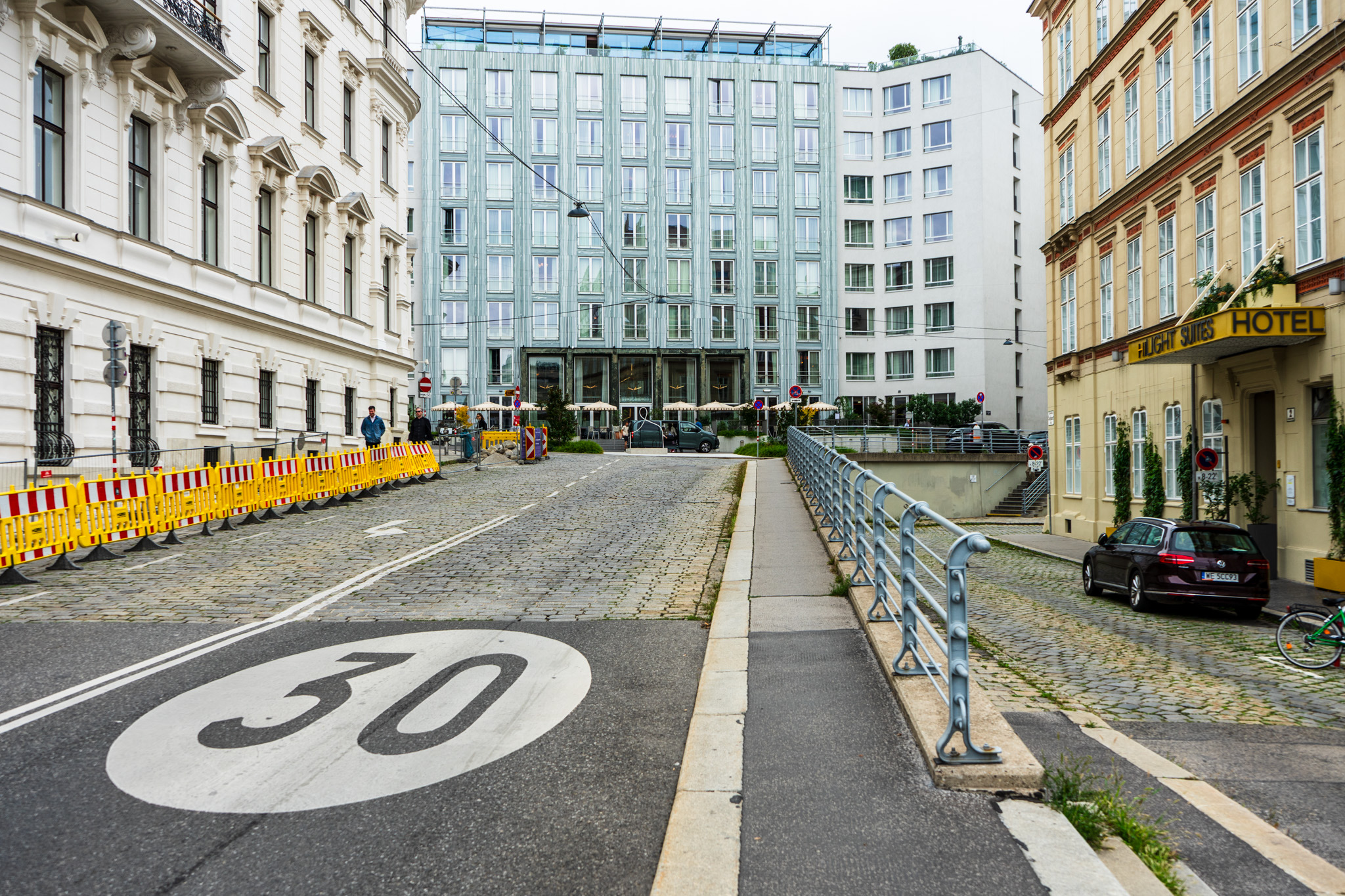
Vienna, Austria

Karlskirche | Vienna, Austria

Vienna, Austria
Acquiring inalienable possession in Spanish: A study of heritage and L2 bilinguals
This study examined how different groups of Spanish-English bilinguals—heritage speakers, L1-English L2-Spanish learners, and L1-Spanish L2-English bilinguals—judge inalienable possession constructions in Spanish. The results show that all three bilingual groups most consistently rated the canonical (clitic + definite determiner) form as acceptable, while hybrid and English-like forms were judged more variably—especially by heritage and L2 Spanish speakers, who were more flexible than the L1-Spanish group. Across all participants, variables like Spanish proficiency, dominance, and language exposure correlated with acceptability, but subgroup analyses showed these effects were not uniform: many correlations disappeared or shifted when groups were analyzed separately, revealing distinct within-group patterns, particularly among heritage speakers. These results suggest that bilingual type crucially shapes how language background factors influence judgments of inalienable possession, underscoring the importance of analyzing bilingual groups separately rather than assuming a single bilingual profile.
 Bryan Koronkiewicz