

Kraków, Poland
Kraków, Poland

Kraków, Poland
Paper presented at the Cognitive Linguistics in the Year 2025 Conference, Kraków, Poland. [PDF]
This study examines how Spanish–English bilinguals judge the acceptability of code-switching, with a focus on whether the order of language acquisition influences sensitivity to structural constraints. Using an acceptability judgment task, the study compares heritage speakers, L1-English L2-Spanish bilinguals, and L1-Spanish L2-English bilinguals on their evaluations of pronoun-switch constructions. Results show that while all groups distinguish between grammatical and ungrammatical switches, late bilinguals differ: those who learned English after Spanish were less likely to reject ungrammatical pronoun switches than those who learned Spanish later. Additional mixed-effects modeling demonstrates that both participant group and bilingual proficiency interact to shape acceptability patterns. Overall, the findings suggest that acquisition order may play a meaningful role in how late bilinguals internalize code-switching constraints.

Zamek Królewski na Wawelu | Kraków, Poland
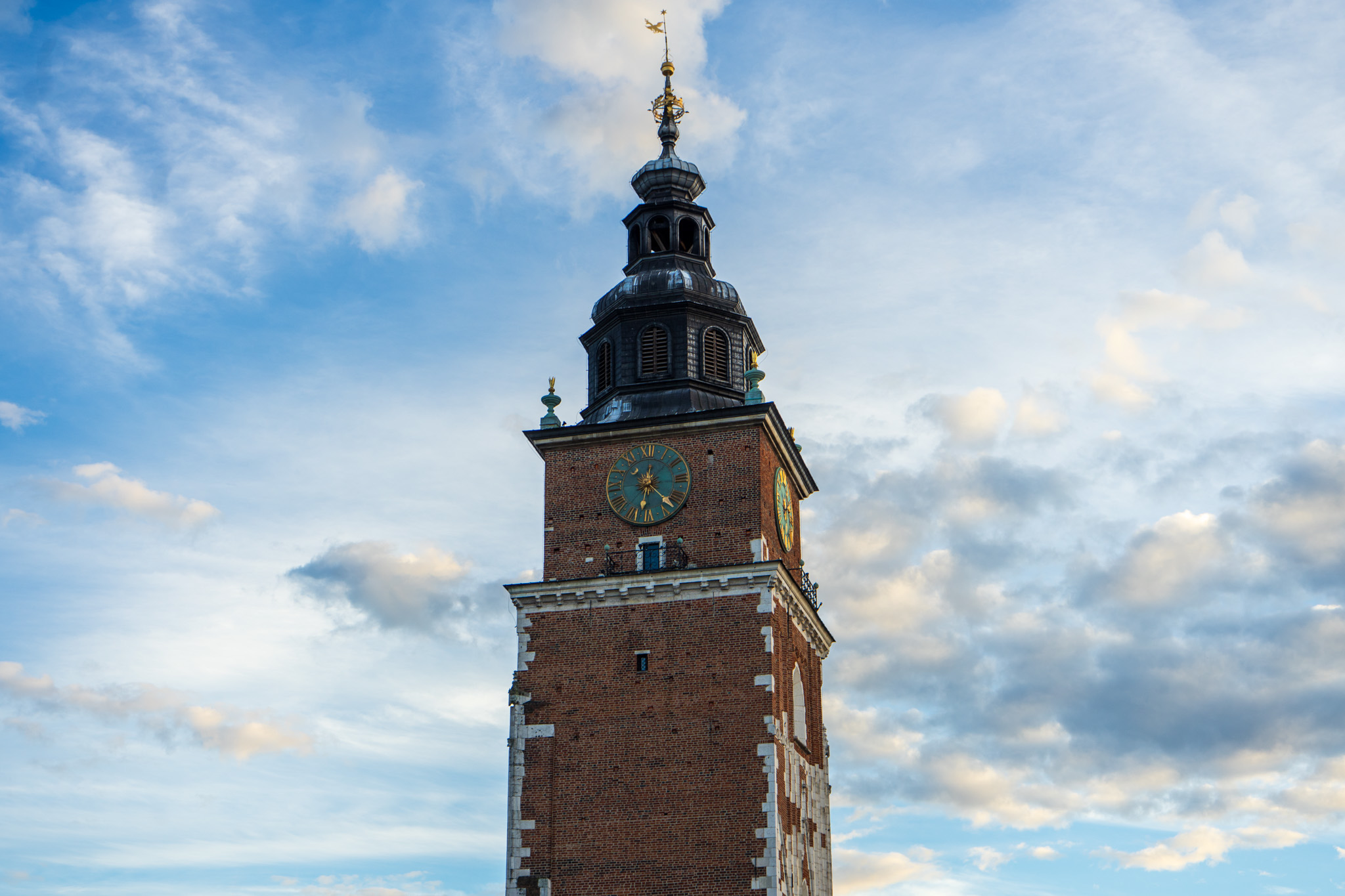
Rynek Główny | Kraków, Poland
Vienna, Austria

Karlskirche | Vienna, Austria

Vienna, Austria
 Bryan Koronkiewicz