

Coyoacán | Ciudad de México
Coyoacán | Ciudad de México

El Ángel de la Independencia | Ciudad de México

Centro Histórico | Puebla, México

Centro Histórico | Puebla, México
This study examines preposition stranding (p-stranding) in Spanish-English code-switching (CS) among US heritage speakers of Spanish, comparing p-stranding and pied-piping with different prepositions across language switches. Preliminary results from an acceptability judgment task indicate that participants preferred pied-piping in Spanish and accepted p-stranding in English, with mixed preferences in CS depending on the direction of the switch. The findings suggest that the language of the preposition influences whether p-stranding is accepted in CS, supporting prior research.

Centro Histórico | Puebla, México

Murcia, España
Article published in Spanish as a Heritage Language.
Intraclausal code-switching is a common bilingual phenomenon that occurs when multiple languages are used in the same utterance. Research has shown that such switching is not arbitrary, but rather systematic and rule-governed. By looking at the syntactic interactions between languages, we can shed light on our understanding of a variety of structural factors as well as bilingual grammars more generally. The present study focuses on data from Spanish- English inalienable possession, which is manifested differently in the two languages (e.g., he washed his face vs. él se lavó la cara ‘(lit.) he to himself washed the face’). The results of an acceptability judgment task completed by US heritage speakers of Spanish suggest that regardless of the direction of the switch, an English-like structure is preferred with a possessive determiner (e.g., he washed su cara), and in the case of a Spanish verb switched with an English object, the preverbal clitic is required as well (e.g., él se lavó his face). Overall, the findings support the view that multiple bilingual alignments (Sánchez, 2019) can be accessed by these individuals both in their monolingual Spanish and in code-switching, suggesting that the bilingual alignments hypothesis can be a useful lens for understanding code-switching patterns.

Erzsébet Bridge | Budapest, Hungary
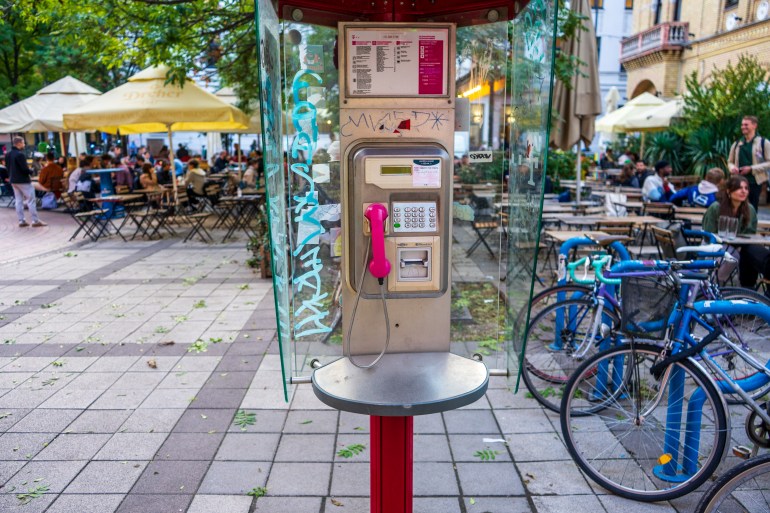
Budapest, Hungary
 Bryan Koronkiewicz